A twelve-year-old with a push mower and six neighbors who needed their yards cut — that’s as close to a business plan as I’ve ever had.
My father died when I was six. My mother was a public school art teacher. The math was simple: if any money was going to be in my pocket, I was going to be the one to put it there. So, I mowed yards. Three years later, at fifteen, I landed my first real job as a radio station disc jockey, spinning records and falling completely in love with music in the process. They gave me the shifts nobody else wanted: Christmas Eve, Christmas Day, New Year’s Eve, New Year’s night. Twelve hours each. Two years straight.
I thought I’d won the lottery.
Spring breaks, summer vacations, Christmas holidays—while my friends were at the lake or sleeping until noon, I was clocked in. And I want to be careful here, because this isn’t a column about how hard I work. My friends have been making jokes about that for thirty years, and I’ve earned every one of them. This is a column about something different. This is about the word itself.
Work.
Say it out loud and watch people’s faces. It hits people the same way “root canal” does, except a root canal has a defined end point and nobody expects you to be grateful for it. Like something to be survived. A condition to be managed rather than a life to be lived. People say find something you love and you’ll never work a day in your life, and they say it with a wink, because they assume it’s the kind of thing that sounds good on a coffee mug and doesn’t actually happen to real people.
For me, it happened. And I’ve never really known how to talk about it.
Started in restaurants at nineteen. Been in them ever since—I’ve made more mistakes than I can count, some concepts I probably should have attempted, and more good nights than I deserve. Somewhere along the way the radio station became a dining room, the dining room became a career, and the career became something I genuinely cannot separate from the rest of my life. Not because I have no boundaries. Because I don’t want any.
The line between work and not-work dissolved a long time ago.
Right now, I’m in Tuscany. Hosting groups through my travel business, Yonderlust Travel. Every morning I walk to the same bakery in Tavarnelle at eight o’clock, stop by the ATM for tip cash, pull up email on my phone, and wait. Every restaurant back home closes at a different hour. The reports come in at different times—nine, ten, eleven at night Mississippi time, which is the middle of the night here—and I am genuinely, embarrassingly eager for each one. Did they hit the budget? How was the bar? What did the kitchen do? When the groups are in Florence or Siena with their guides and I have a few free hours, I find a hotel lobby with decent Wi-Fi and get to it. After dinner at the villa. Early in the morning before the group is up. Forty hours a week, easy. From Tuscany. While running a travel tour.
My friends think this is a problem worth discussing. I think it’s Tuesday.
But here’s the thing I keep circling back to: I don’t have a better word for any of it. Work keeps popping up, and every time it does, I feel like it doesn’t fit—at least not the way most people mean it. So, I’ve been trying to find the right one. Craft? Too precious. Calling? Closer, but it sounds like I’m about to pass a collection plate. Engagement? A consultant wrote that word. Purpose? Getting warmer. Obsession? Probably.
Maybe the problem isn’t the word. Maybe the problem is the face people make when they hear it.
When my son was fourteen, he came to me and asked what he should do with his life. I told him you’ll figure it out, son—whatever it is, find the thing that you love to do, see if you can get paid for it, and do that. And then something came out of my mouth I hadn’t planned, hadn’t even thought before. I said, “Son, in all the years I have been in the restaurant business, I have never once woken up in the morning and told myself, oh damn, I’ve got to go to work.”
Not once. Not in forty-five years.
As the words were coming out, I realized they were true. I think we were both surprised. That’s what I wished for him—not a profession, not a salary, not a title. Just that. He ended up in the restaurant business, not because I pushed him toward it but because he felt the pull on his own. CIA-trained, worked in Florence and New York and Chicago and New Orleans, and soon he’ll be coming home to Mississippi. There are things a father hopes for his son that he never says out loud, because saying them feels like tempting fate. That one came true. So far, he’s doing great. Better than great.
Once the kids were out of the house, something shifted. Any spare moment that used to go toward a movie or a television show now goes toward a business podcast, a marketing website, a report from one of the concepts. From the time I wake up until the time I go to bed, I’m engaged. Jill has a different word for it. She has used this word consistently for thirty-three years, with remarkable accuracy and zero signs of fatigue, which, if you think about it, is its own kind of work ethic.
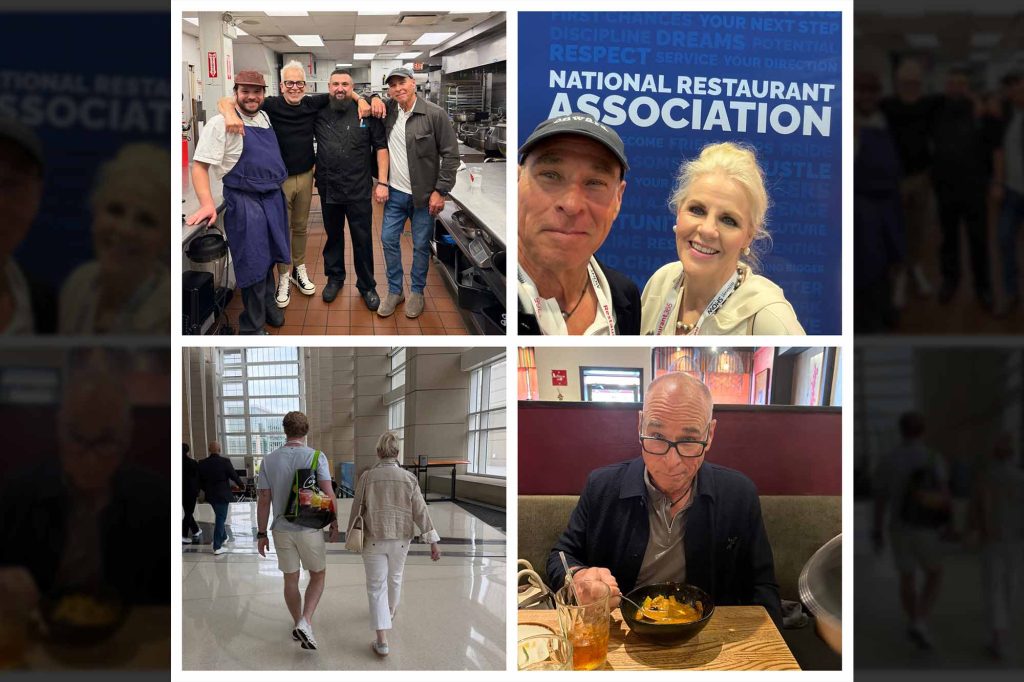
People tell me all the time: I don’t know how you do everything you do. The honest answer is: I don’t do it alone. Not by a long shot. The team around me these days—in the restaurants, in travel, in food products, in publishing—I don’t deserve them, honestly. Jarred, Maria, Chad, Nevil, Jennifer, Simeon, Brittany, and a few hundred others—people who show up, who care, who make the whole thing run while I’m chasing down ATM cash in a Tuscan hill town so I have tips for servers and staff ready by nine AM. You surround yourself with people like that, and the word work starts to feel less like a complaint and more like a privilege.
Which, I think, is where I’ve landed. Not on a better word—I’ve tried, and I’m giving up—but on a better understanding of the one we’ve got. Work isn’t the problem. Doing something you’d rather not be doing, every day, indefinitely—that’s the problem. The word just took the blame.
Across everything I do—the restaurants, the travel, the books, the columns, the food products, the television—I have complete creative control. Complete ownership. That’s not a small thing, and I don’t take it lightly. Lord knows I’ve gotten it wrong enough times to understand what a gift it is. Most people spend entire careers executing someone else’s vision, answering to someone else’s taste, building something that will never fully belong to them. Through some combination of stubbornness, luck, and genuinely not knowing any better, I never had to do that. Every concept, every menu, every column, every tour itinerary—mine to get right or wrong, mine to be proud of or fix. That kind of freedom doesn’t make the work easier. It makes it mean something.
Maybe that’s the better word. Not work. Not craft or calling or purpose.
Mine.
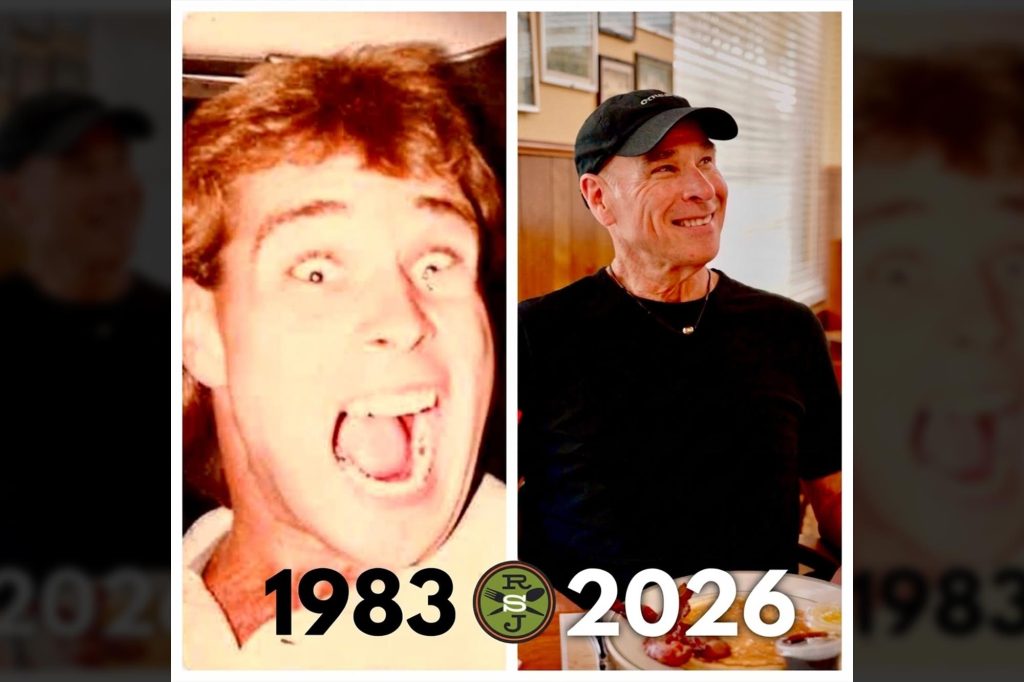
Twelve years old, I pushed a mower across six neighbors’ yards and kept every dollar. The ownership started there. It never really stopped.
Onward.